Google

Saturday, October 21, 2006

Festival of lights...Diwali

Happy Diwali to Indians worldwide~ and Malaysian's like me finding every excuse to have a festive celebration!

Diwali, also called Deepavali (Hindi: Diwali or Deepavali, Marathi: Tamil: Kannada: Deepavali) is a major Hindu festival. Known as the "Festival of Lights," it symbolises the victory of good over evil, and lamps are lit as a sign of celebration and hope for mankind. The festival of Diwali or Deepawali (literal meaning: lines of lamps) is rooted in the mythological epic Ramayana, and is a celebration of the return of Lord Ram after killing Ravan the Demon during his exile for 14 years. The day of killing Ravan is celebrated as Dussehra (19 to 21 days before Diwali). Celebrations focus on lights and lamps, particularly traditional diyas. Fireworks are associated with the festival in many regions of India.

Diwali is celebrated for five consecutive days in the Hindu month of Ashwayuja. It usually occurs in October/November, and is one of the most popular and eagerly awaited festivals of India. Hindus, Jains and Sikhs alike regard it as a celebration of life and use the occasion to strengthen family and social relationships. (wikipedia)
When the Malays celebrated "Hari Raya"; my chinese family would have a celebration of our kind; charcoal on the barbecue pit, Mah-Jong sets, wine, cards, Karaoke, and the sort! *laughs* I love being Malaysian...and I love my family's take on life and festivity.
Still in tune with my habits from home; I had a little Diwali celebration in my Sydney kitchen.
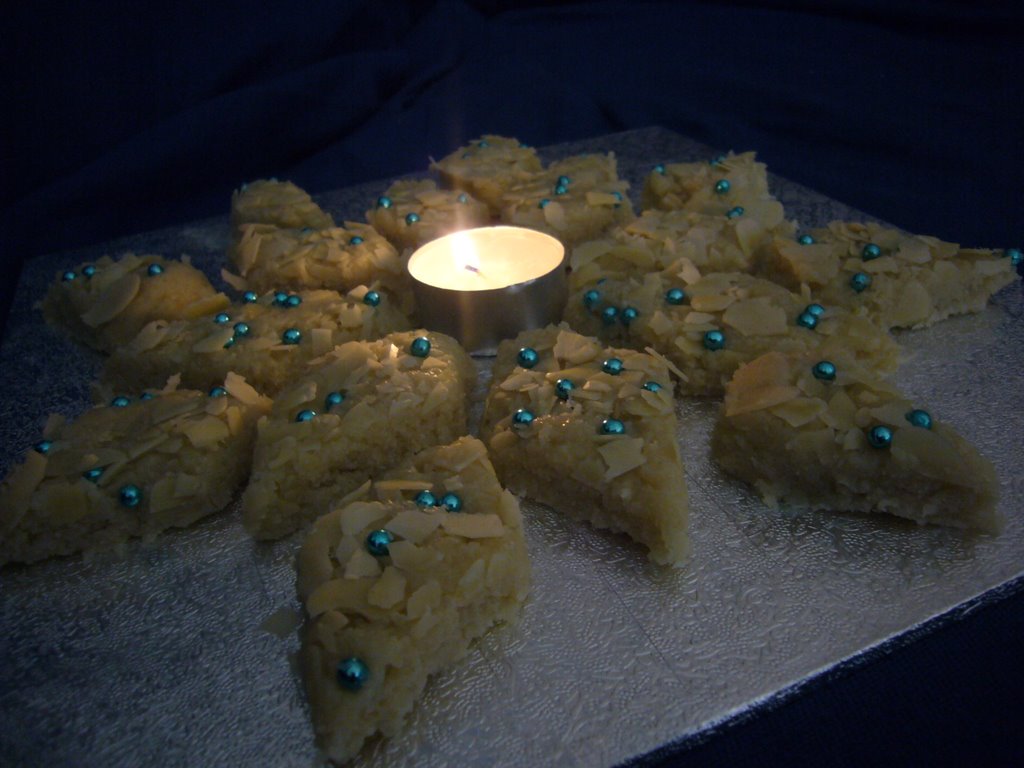
Milk and Coconut Burfi
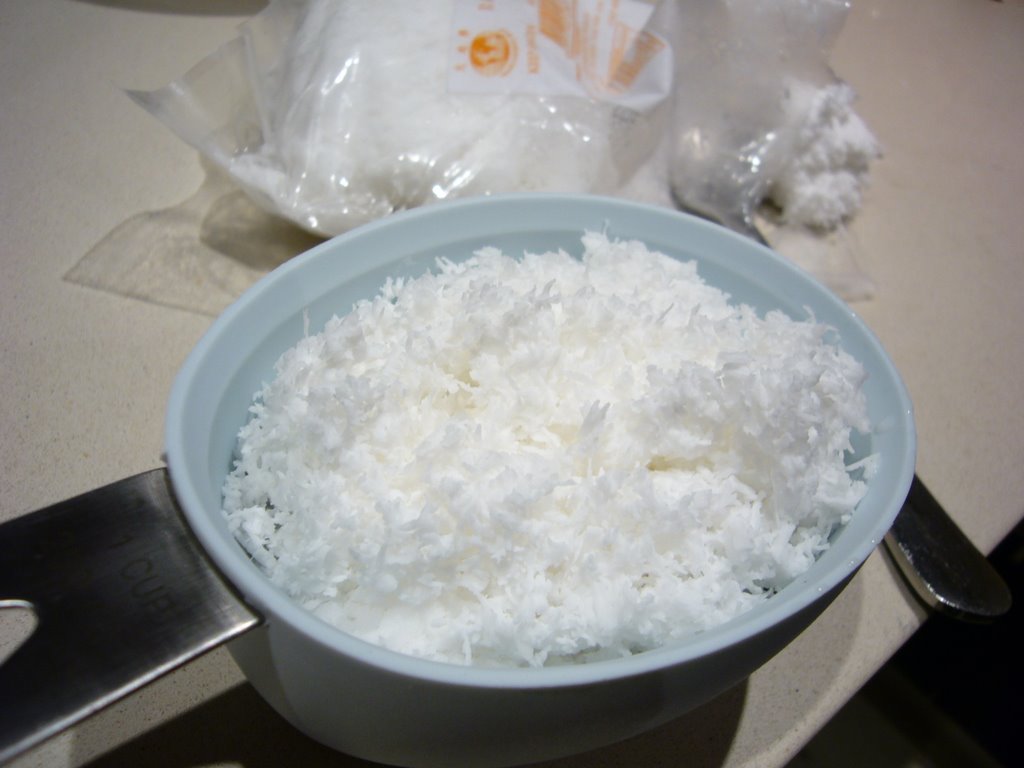
1 cup fine grated fresh coconut
1 L milk
3/4 cup sugar
3 tbsp condensed milk
3-4 tbsp ghee (I omitted)
5 cardamom pods
Chopped almonds as garnish
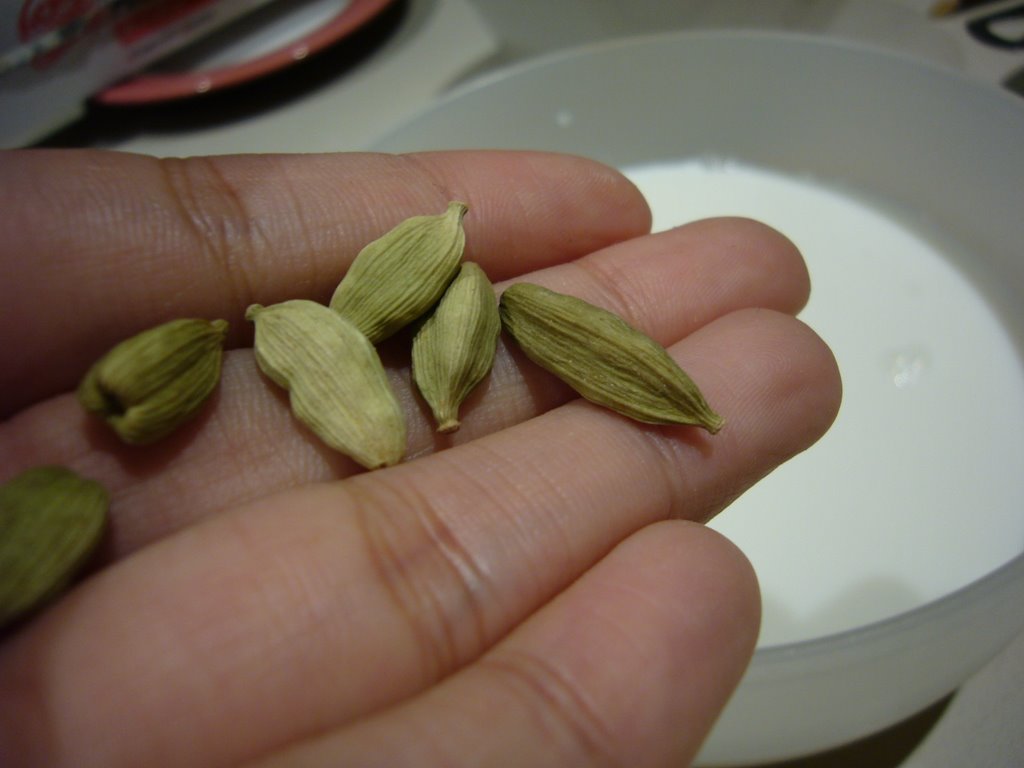
Heat milk and cardamom in a large pot, take it off the stove and cover with lid for 30 minutes. SPoon out the pods. Return pot to stove and add the rest of the ingredients (leave out the almonds). Stir mixture over low heat for about 1-2 hours till mixture turns thick and sticky. Be careful to watch for the milk burning. Try using a pot with a thick base and stirring continuously. When lumpy and sticky, add in the ghee and cook for another 30 minutes. Dish out onto a greased mold/tray or layer with clingfilm (like I have done with mine). Top with almonds and allow to set overnight. Slice to serve.This recipe reminds me of a creamier and softer version of coconut candy I used make in Malaysia.
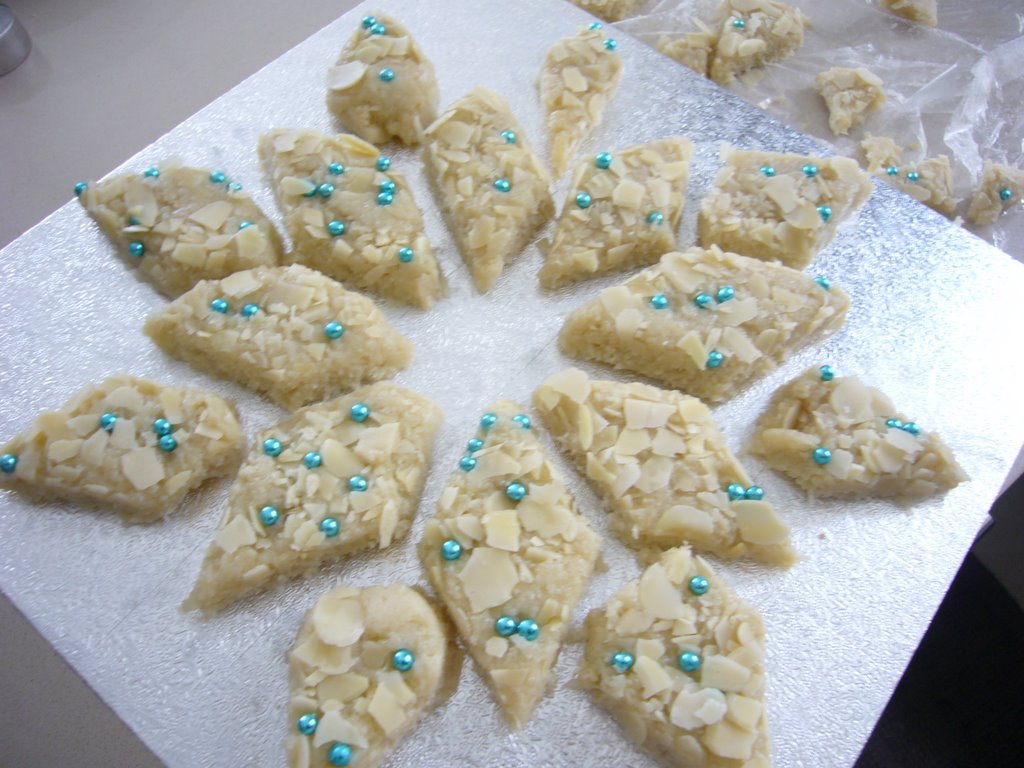
burfi is an Indian /Pakistani sweet made from condensed milk, cooked until it solidifies. Barfi is often flavoured with cashew, mango, pistachio and spices, and is sometimes served coated with a thin layer of actual silver. Visually, barfi sometimes resembles cheese, and may have a hint of cheese to it. For this reason, barfi is sometimes called "Indian cheese cake". Barfi is popular all over India and is often a part of Indian festivals (wikipedia)
Indian sweets are commonly eaten in small portions as they are meant to be very sweet and intensely rich. These gave me an immediate sugar rush with one mouthful! Haha; I still remember my first taste of Gulab Jamun...it was probably the sweetest thing I've eaten to date! *laughs*
Im visiting an Indian home for dinner to celebrate! *gets excited* Thanks heaps to Pinky's family for inviting Amrit and I over!

Tags:

AddThis Social Bookmark Button

Thursday, October 19, 2006

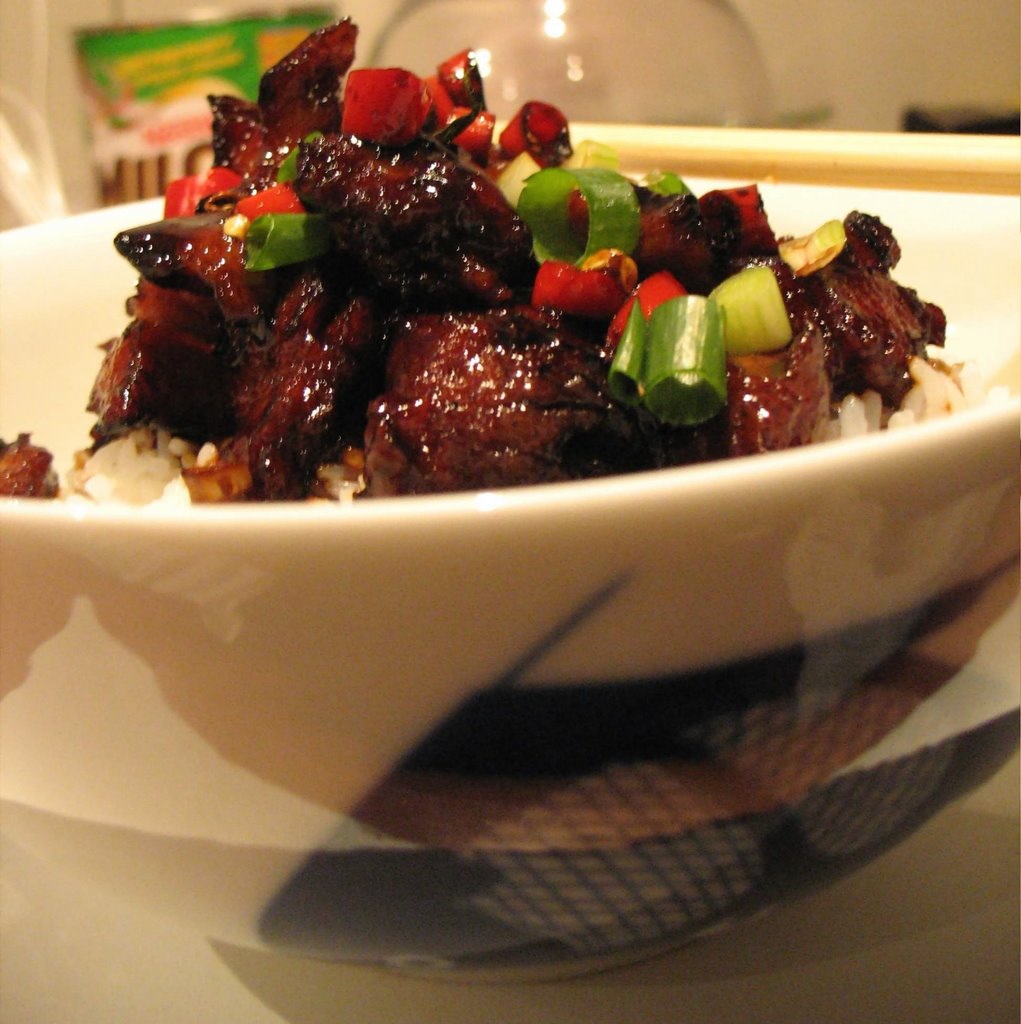
gyutan don


awhile ago , i was a regular patron of a cozy japanese place until i became loyal to this particular item on the menu . the only catch was that , for the longest time , i never bothered to figure out what it was exactly .

it's understood that many will be uncomfortable even with the thought of using the main ingredient .

why ?

gyutan is japanese for ox tongue .

i can already sense the squirms...but hey , at a mere flat market rate of 3 bucks per giganormous piece , it's will save you loads of money when it comes to meals , expecially with such a simple recipe . at this price , you'd be wondering how much those korean barbeque places earn . peculiarly , i've encountered gyutan don only in the japanese place i mentioned .

just a few notes before you attempt this ( if you actually want to ) . when working with ox tongue , understand that you need to wash it very thoroughly with cold water and then wash it even more thoroughly again and again . get the point ? haha...why the cold water ? it's extremely difficult to manouver around and slice when it's not stiff and almost impossible without a sharp knife . also , make sure you skin it and only use the meat . one final thing , don't chop it into chunks like me...really...only use very thin slices .

there are absolutely no recipes for this online , so i had to come up with one myself...a not so japanese but simple one .

what you need ar?

1/2 ox tongue , sliced very thin
1/3 cup mirin
1/3 cup dark soy sauce
1 tablespoon oil
spring onion , chopped
small red chillis (a.k.a. cili padi) , chopped

how liao ?

see how short the ingredient list is ? simply marinade the well-washed tongue slices in mirin and dark soy sauce for an hour or two . grill on an oiled pan until cooked ( which would take only a couple of minutes if you use slices hor ) . towards the end , season with a touch of mirin and off the fire . just before serving , briskly toss it in the spring onion and chillis to give them that extra oomph . it's that simple lor .


Tags:

AddThis Social Bookmark Button

Tuesday, October 17, 2006

Kaya

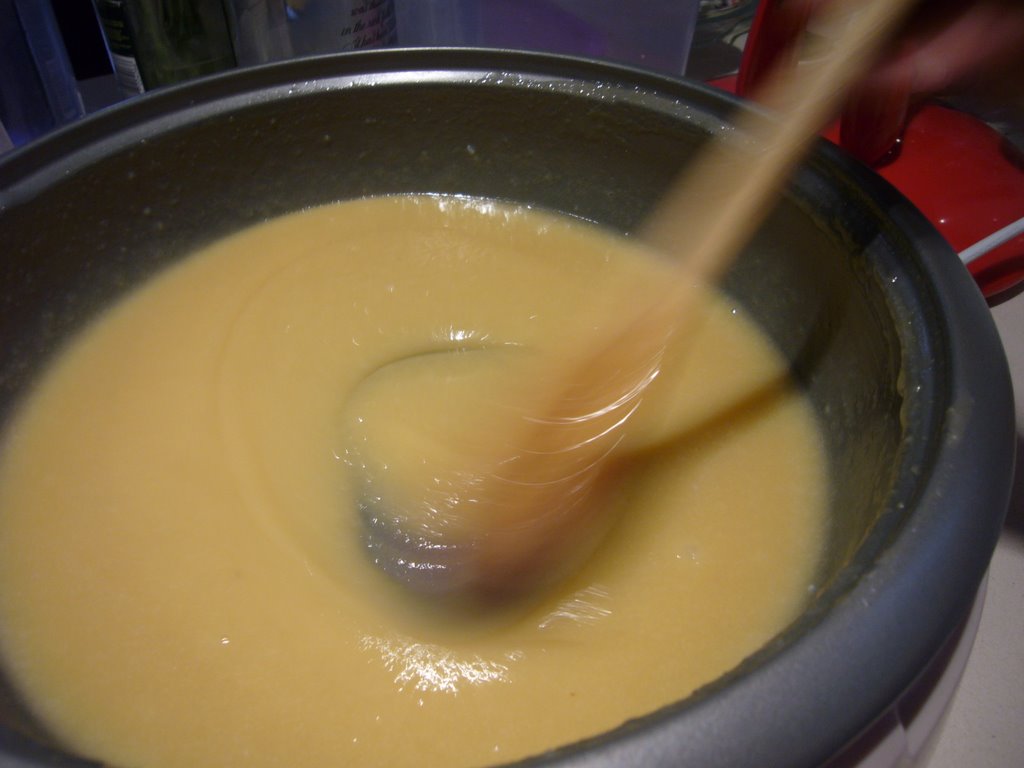
I spent 3 1/2 hours reading my management notes, preparing dinner and dancing away to music as I stood stirring this precious pot all afternoon.
What's so precious? you ask...
It's Kaya. The word "Kaya" means "rich" in the Malay language, and RICH is definitely a good word to represent its yummy sweet gooey-ness ! In culinary terms, Kaya would be described as a Malay spread of Egg curd/jam.
In Malaysian-student-studying-abroad terms, Kaya= MmmMmmmmm!*YUM!!*

I'm usually all for fast and easy recipes; the type of person who would try cooking/defrosting/baking almost everything in the microwave to see if it works quicker that way! *laughs* I'm still bewildered by how I refused to work that same way this morning. I browsed and took apart 8 or more Kaya recipes online and from books. I tweaked my proportions a little according to reviews and Kaya-making tips available to reduce the sugar and cholesterol levels without destroying the recipes completely.

1 1/2 cup sugar
1 1/3 coconut milk - try to get freshly squeezed milk (canned worked fine for me too *shrug*)
5 eggs (XL size)- use very FRESH eggs

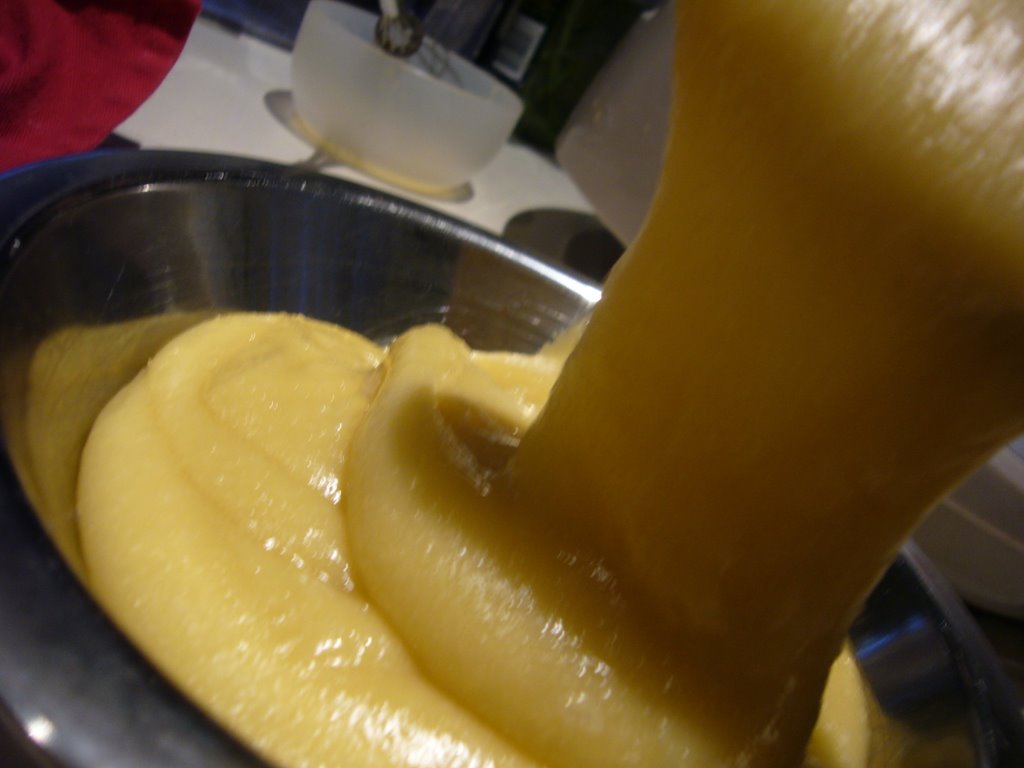
Beat eggs and sugar till well blended. Cook in a slow cooker over low heat. When slightly thickened, pour in coconut milk in a thin stream. Stir well until liquid mixture is thick and gooey. The color should have changed from yellow to a darker shade in 1-2 hours of constant stirring. Look for a recipe you can do in the microwave if you're feeling lazy. Google is gold. *wink*

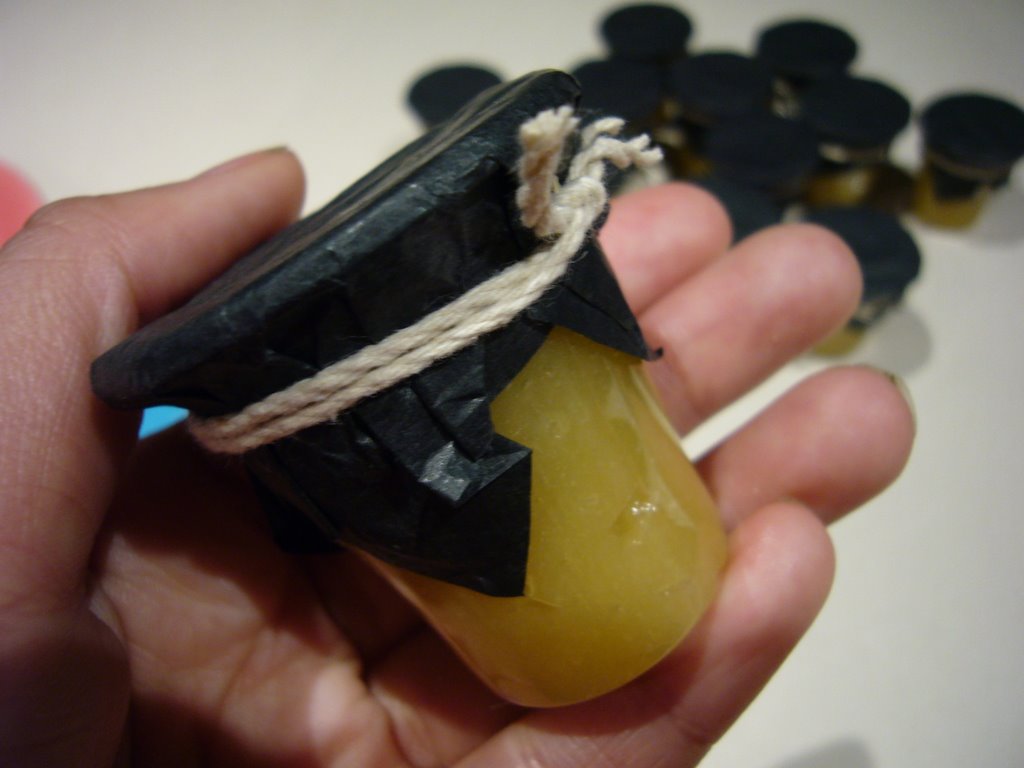
*sigh* My end product was SOoo VERY satisfying....stirring Kaya in my slowcooker continuously for hours was frustrating but there wasn't any other way to achieve deliciously smooth, silky Kaya!I decided to share my Kaya with several Malaysian friends who lived nearby to try making it worth my trouble. I would eat my Kaya on a slice of toast for breakfast in the morning; but I wouldn't touch Kaya out of jars available at Asian supermarkets...
After having a go at making my own; and shivering at the cup loads of sugar....I wonder what goes into manufactured Kaya which tastes a WHOLE lot sweeter and is BROWN....mine is yellow...cup and cups of sugar caramelizing was done to achieve its dark rich color. *shudder*
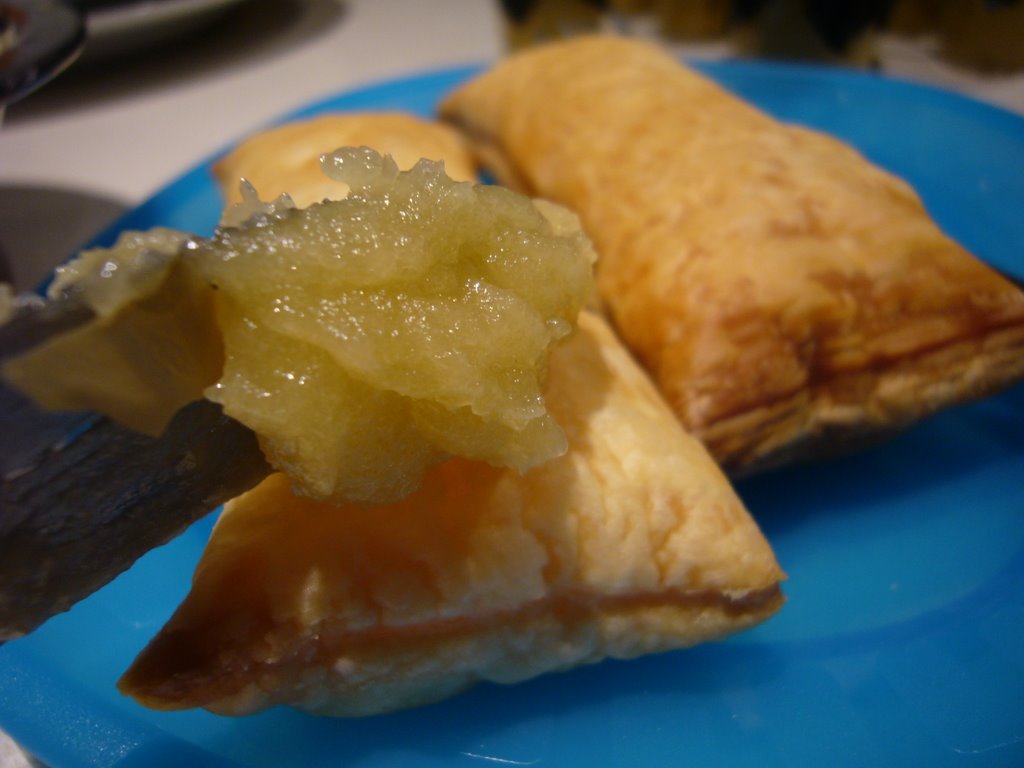
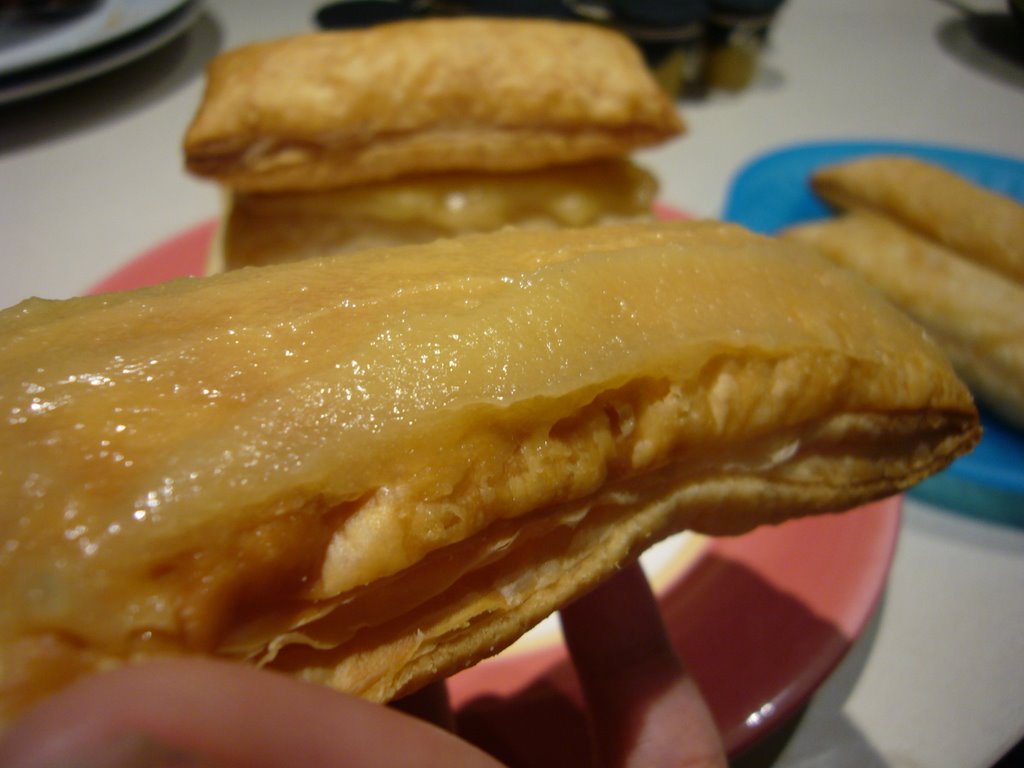
I made several strips of butter-y puff pastry as a delicious accompaniment to our freshly made Kaya. Dessert was simply divine!...*sigh* heavenly....*licks lips*

Tags:

AddThis Social Bookmark Button